NRA Youth Firearms Training
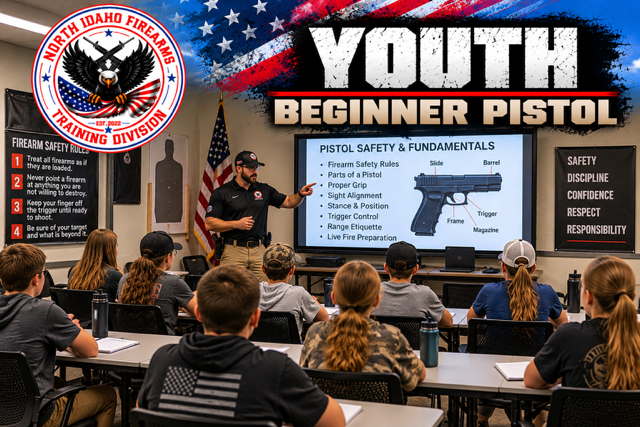
Youth Beginner Pistol Training Course
Ages: 8–17
Length: 5 hours
Format: Classroom instruction only
Live Fire: None
Recommended class size: Maximum of 10 students, with additional instructors assisting during handling exercises.
Cost: $40
Course Description
This introductory course teaches young students how semiautomatic pistols and revolvers operate, how ammunition functions, and how to handle, transport, unload, inspect, and maintain a pistol safely.
Training emphasizes responsibility, muzzle awareness, trigger discipline, communication, and respect for firearms. All handling exercises are conducted under direct instructor supervision using unloaded firearms, inert training pistols, and dummy ammunition.
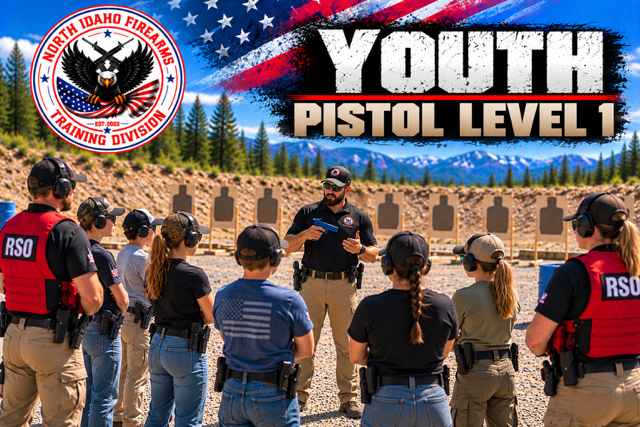
Youth Pistol Level 1
Length: 4 hours
Format: All live-fire range training
Cost: Starting at $60
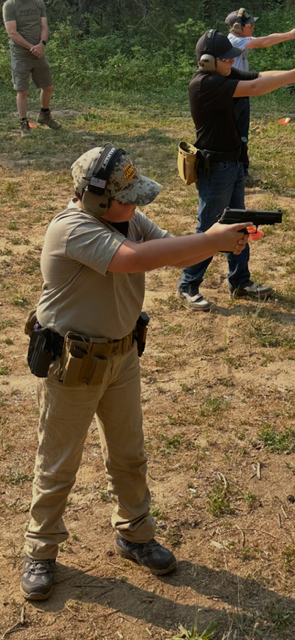
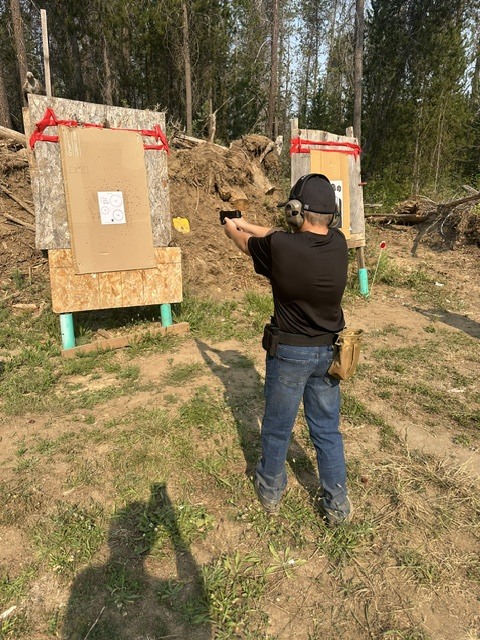
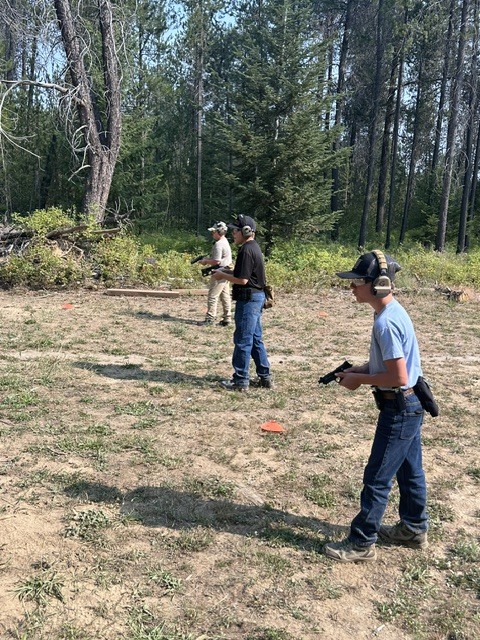
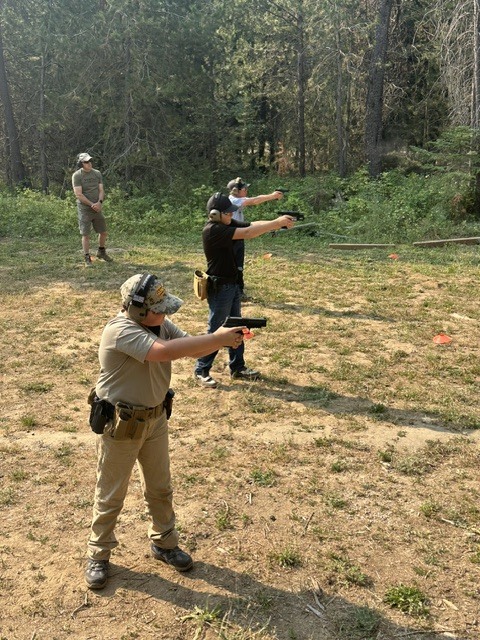
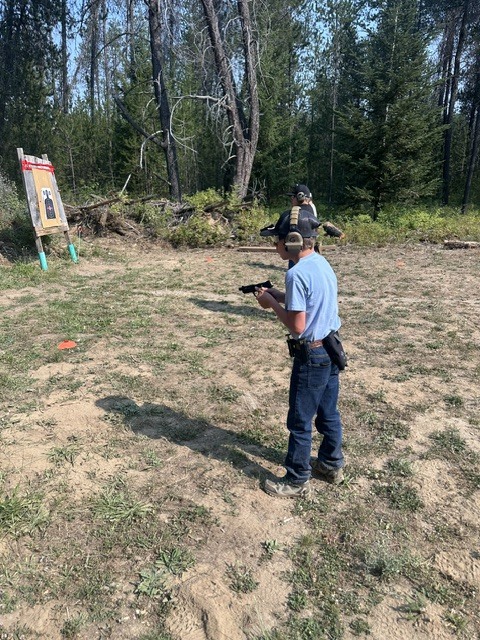
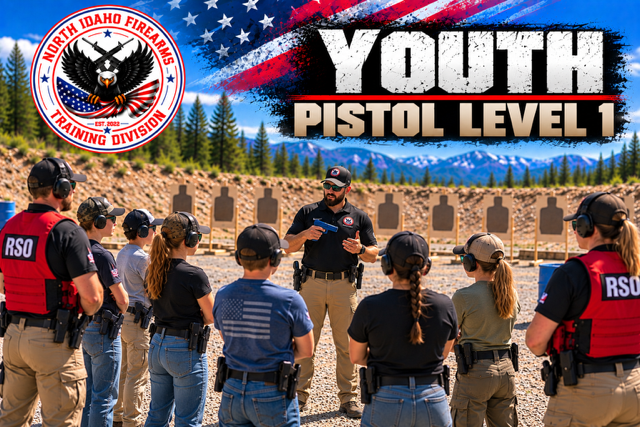
Youth Pistol Level 1 builds safe firearm handling habits, confidence, and basic marksmanship through closely supervised range instruction. Students practice at a controlled pace, with safety emphasized throughout every exercise.
Course topics
- Basic firearms safety and the four rules of firearm safety.
- The eight fundamentals of shooting: stance, grip, sight alignment, sight picture, breathing, trigger control, follow-through, and recovery.
- Trigger-finger discipline and safe muzzle control.
- Proper conduct on a live-fire range, including following instructor directions and range commands.
- Hot-range and cold-range procedures, including when firearms may be handled.
Youth Pistol Level 2
Length: 5 hours
Format: All live-fire range training
Cost: Starting at $100
Prerequisite: Youth Pistol Level 1 or lead instructor approval.
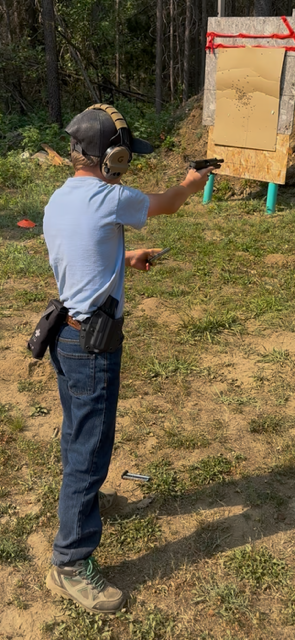
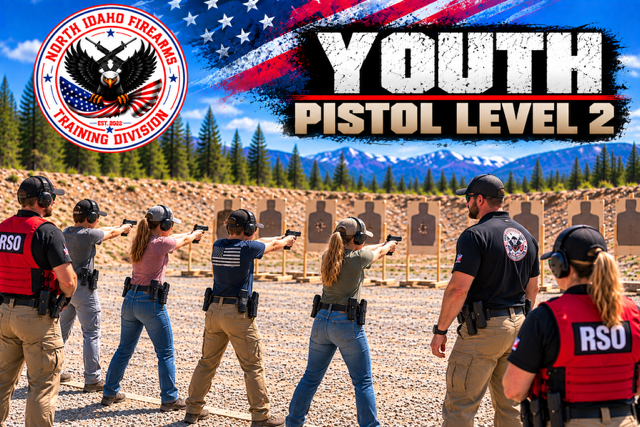
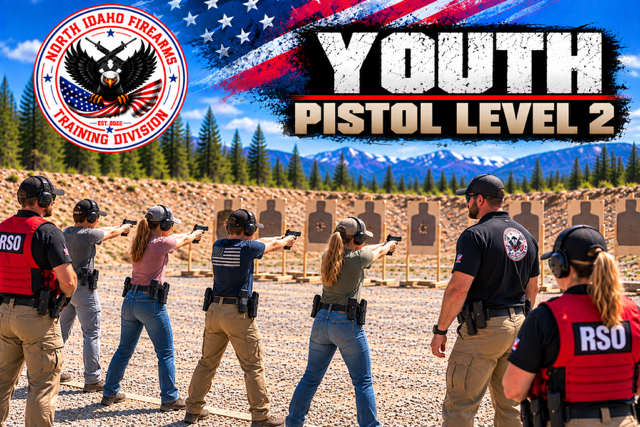
Youth Pistol Level 2 builds on the safety, handling, and marksmanship skills introduced in Level 1. Students receive closely supervised instruction and individual coaching as they develop consistent pistol handling, learn safe holster use, and improve accuracy. Exercises progress according to each student’s demonstrated safety and readiness.
Course topics
- Review of basic firearms safety and the four rules of firearm safety.
- Reinforcement of the eight fundamentals of shooting: stance, grip, sight alignment, sight picture, breathing, trigger control, follow-through, and recovery.
- Consistent muzzle control and trigger-finger discipline.
- Range commands, proper range conduct, and hot- and cold-range procedures.
- Safe holster use, including supervised drawing and reholstering.
Youth Pistol Level 3
Length: 6 hours
Format: All live-fire range training
Cost: Starting at $125
Prerequisite: Youth Pistol Level 2 or lead instructor approval. Students must demonstrate safe handling and proficiency with Level 2 skills before participating in movement exercises.
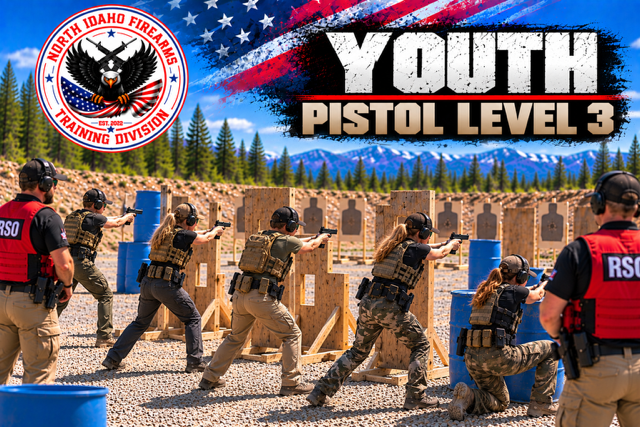
Youth Pistol Level 3 builds on Level 2 with more demanding marksmanship exercises, multiple targets, supervised movement, and shooting for speed and accuracy. Students progress at a pace appropriate to their demonstrated ability. Safe handling and accurate hits remain the priority throughout the course.
Course topics
- Range and firearm safety review, including the four safety rules, range commands, and hot- and cold-range procedures.
- Reinforcement of the eight fundamentals of shooting, muzzle control, and trigger-finger discipline.
- Magazine-changing and malfunction-clearing drills under instructor supervision.
Beginner
Ages: 8–17
Length: 5 hours
Format: Classroom Instruction Only
Live Fire: None
Cost: $40
Course Description
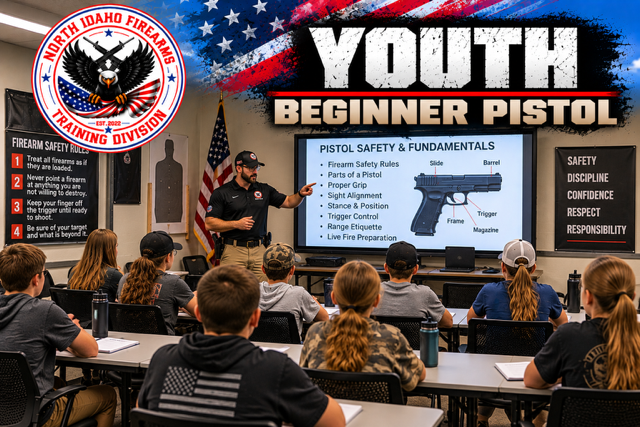
This introductory course teaches young students how semiautomatic pistols and revolvers operate, how ammunition functions, and how to handle, transport, unload, inspect, and maintain a pistol safely.
Training emphasizes responsibility, muzzle awareness, trigger discipline, communication, and respect for firearms. All handling exercises are conducted under direct instructor supervision using unloaded firearms, inert training pistols, and dummy ammunition.
Safety Requirements
- No live ammunition permitted in the classroom.
- Firearms are inspected and cleared before entering the classroom.
- Only instructor-provided dummy ammunition or snap caps may be used.
- Students must follow all instructor commands immediately.
- Eye protection is required during disassembly and maintenance.
- Parent or guardian authorization is required.
- Parents or guardians are encouraged to attend.
- Firearms remain pointed in a designated safe direction during every exercise.
- Instructor-to-student ratio of approximately 1:4 is recommended during firearm-handling exercises.
Course Objectives
By the end of the course, students should be able to:
- Recite and explain the four fundamental firearm safety rules.
- Identify the major components of a semiautomatic pistol and revolver.
- Explain how semiautomatic pistols and revolvers operate.
- Identify common handgun ammunition and cartridge components.
- Explain what happens when a cartridge is fired.
- Demonstrate safe muzzle and trigger-finger control.
- Demonstrate the eight fundamentals of shooting.
- Safely load, unload, and verify the condition of a pistol using dummy ammunition.
- Explain safe firearm transportation and storage.
- Demonstrate proper behavior at a shooting range.
- Perform basic field stripping, cleaning, inspection, and reassembly under supervision.
Five-Hour Course Schedule
Time
Instructional Block
0:00–0:20
Welcome, course expectations and classroom safety
0:20–0:55
Four fundamental firearm safety rules
0:55–1:35
Semiautomatic pistols and revolvers
1:35–1:45
Break
1:45–2:20
Ammunition types, components and operation
2:20–2:55
Safe loading, unloading and condition verification
2:55–3:05
Break
3:05–3:55
Eight fundamentals of shooting
3:55–4:20
Safe transportation, storage and range etiquette
4:20–4:30
Break
4:30–4:55
Field stripping and basic maintenance
4:55–5:00
Final review and course completion
NEXT YOUTH CLASS:
NEXT CLASS TBD
***Parents will also be required to sign any and all waiver forms before their child can participate. ***
LEVEL 1
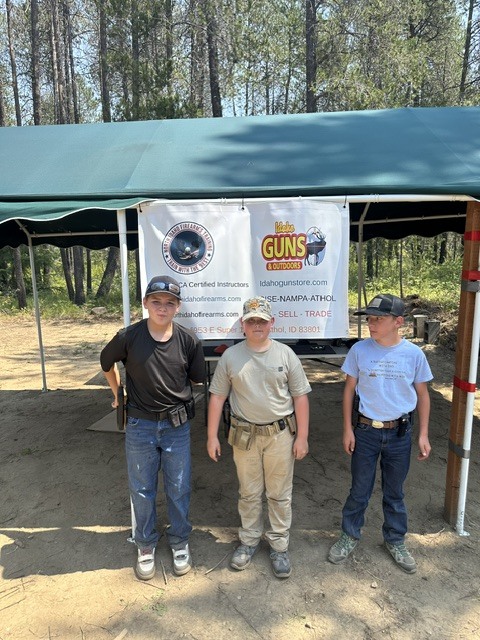
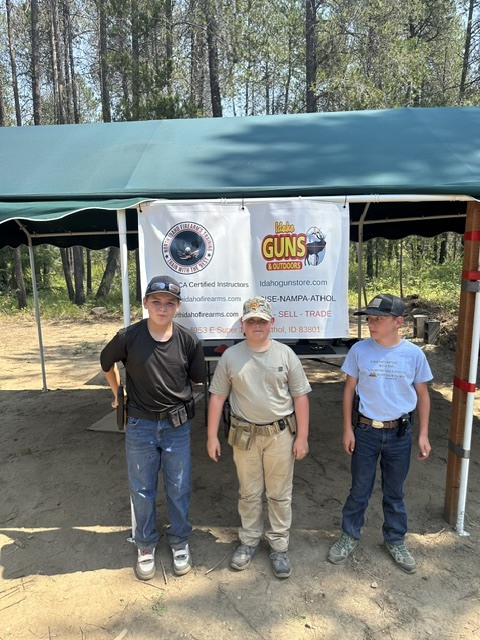
Youth training classes are open to kids 8 years old to 17 years old. Rifle, Pistol and Shotgun training are some of the classes we offer. From beginner to advanced level.
Intermediate classes start with basic fundamentals, then move into hands on training. More emphasis on trigger control, muzzle control, engaging with multiple targets, and slow walk with their firearm. Advanced will be all range time, with parents present. Space for this class would be limited to 8 kids, who must have taken my intermediate course, or be able to show they have taken an equivalent course from another certified instructor.
NEXT YOUTH CLASS:
NEXT CLASS TBD
***Parents will also be required to sign any and all waiver forms before their child can participate. ***
LEVEL 2
Youth training classes are open to kids 8 years old to 17 years old. Rifle, Pistol and Shotgun training are some of the classes we offer. From beginner to advanced level.
Advanced will start with basic fundamentals, then move into speed reloading, engaging multiple targets, shooting on the move, shooting from holster.
NEXT YOUTH CLASS:
NEXT CLASS 2027
***Parents will also be required to sign any and all waiver forms before their child can participate. ***