North Idaho Firearms

NRA Youth Firearms
Training
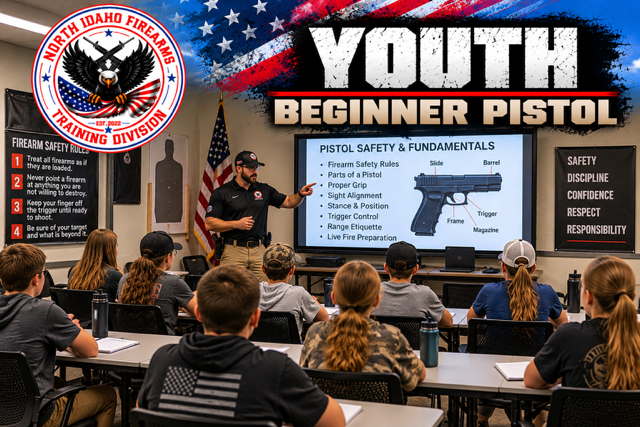
Youth Beginner Pistol Training Course

Ages: 8–17
Length: 5 hours
Format: Classroom instruction only
Live Fire: None
Recommended class size: Maximum of 10 students, with additional instructors assisting during handling exercises.

Cost: $40

Course Description

This introductory course teaches young students how semiautomatic pistols and revolvers operate, how ammunition functions, and how to handle, transport, unload, inspect, and maintain a pistol safely.

Training emphasizes responsibility, muzzle awareness, trigger discipline, communication, and respect for firearms. All handling exercises are conducted under direct instructor supervision using unloaded firearms, inert training pistols, and dummy ammunition.
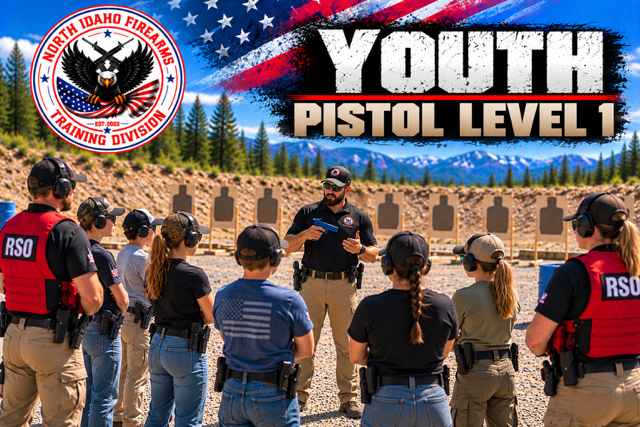
Youth Pistol Level 1

Length: 4 hours
Format: All live-fire range training
Cost: Starting at $60

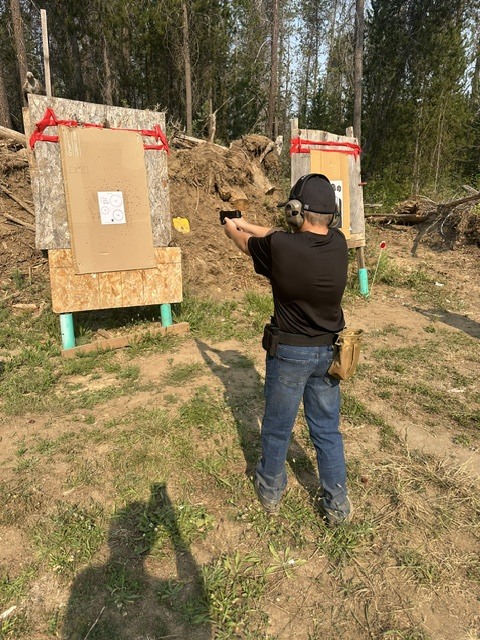
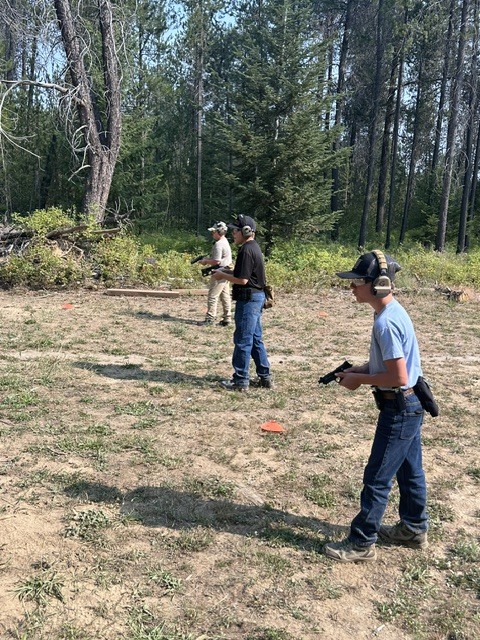
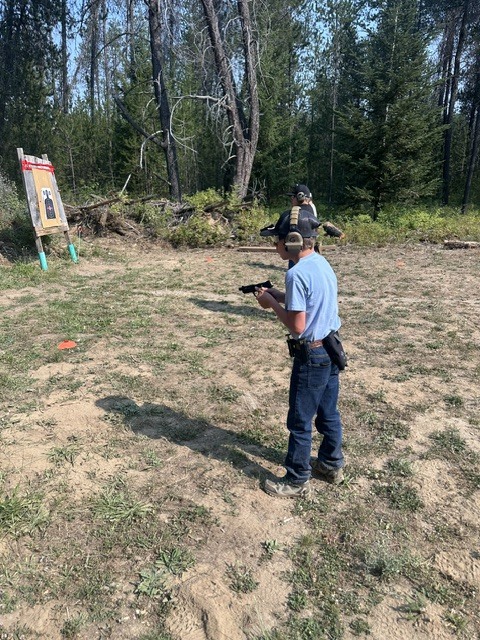
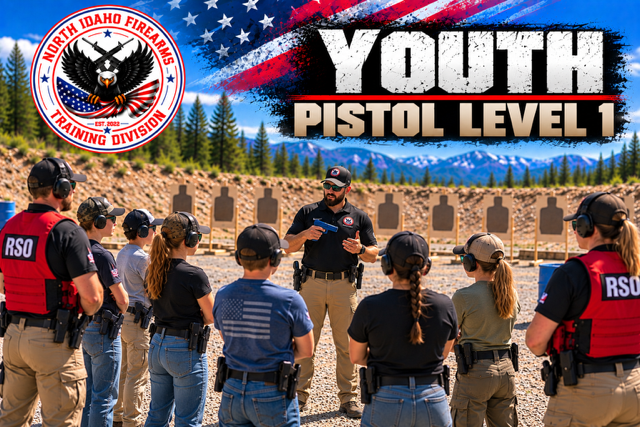
Youth Pistol Level 1 builds safe firearm handling habits, confidence, and basic marksmanship through closely supervised range instruction. Students practice at a controlled pace, with safety emphasized throughout every exercise.

Course topics

  • Basic firearms safety and the four rules of firearm safety.
  • The eight fundamentals of shooting: stance, grip, sight alignment, sight picture, breathing, trigger control, follow-through, and recovery.
  • Trigger-finger discipline and safe muzzle control.
  • Proper conduct on a live-fire range, including following instructor directions and range commands.
  • Hot-range and cold-range procedures, including when firearms may be handled.
Youth Pistol Level 2

Length: 5 hours
Format: All live-fire range training
Cost: Starting at $100
Prerequisite: Youth Pistol Level 1 or lead instructor approval.

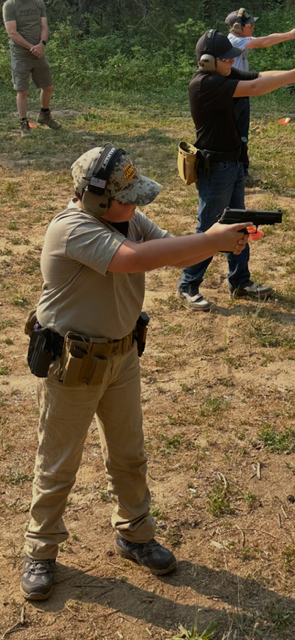
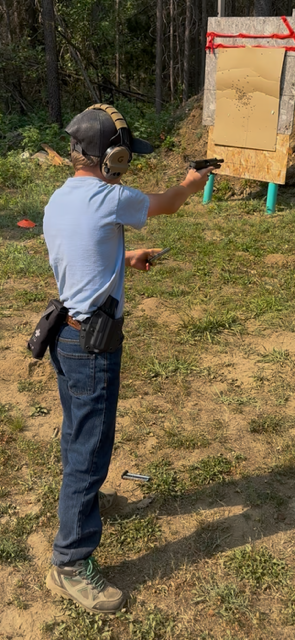
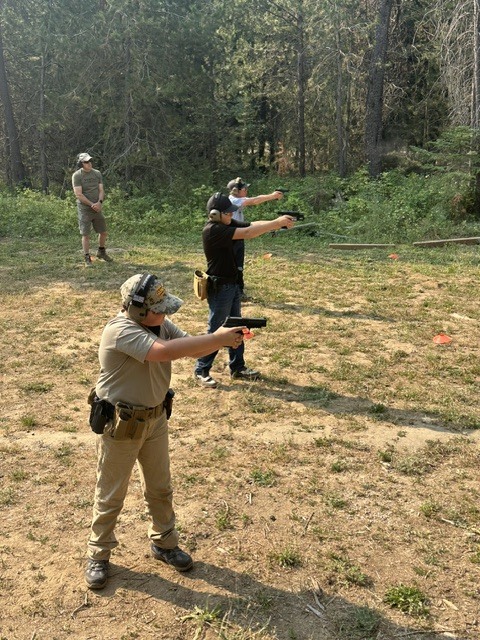
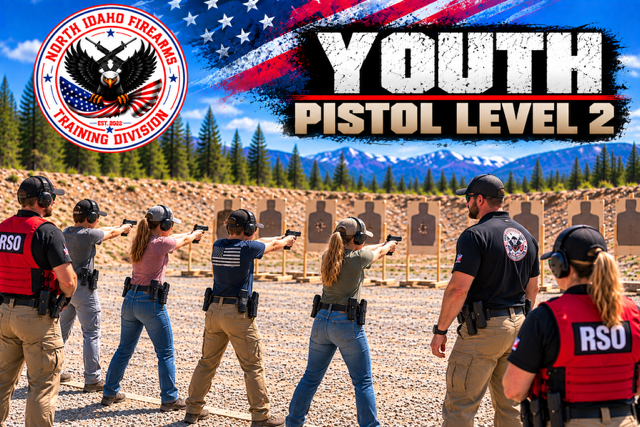
Youth Pistol Level 2 builds on the safety, handling, and marksmanship skills introduced in Level 1. Students receive closely supervised instruction and individual coaching as they develop consistent pistol handling, learn safe holster use, and improve accuracy. Exercises progress according to each student’s demonstrated safety and readiness.

Course topics

  • Review of basic firearms safety and the four rules of firearm safety.
  • Reinforcement of the eight fundamentals of shooting: stance, grip, sight alignment, sight picture, breathing, trigger control, follow-through, and recovery.
  • Consistent muzzle control and trigger-finger discipline.
  • Range commands, proper range conduct, and hot- and cold-range procedures.
  • Safe holster use, including supervised drawing and reholstering.
Youth Pistol Level 3

Length: 6 hours
Format: All live-fire range training
Cost: Starting at $125
Prerequisite: Youth Pistol Level 2 or lead instructor approval. Students must demonstrate safe handling and proficiency with Level 2 skills before participating in movement exercises.

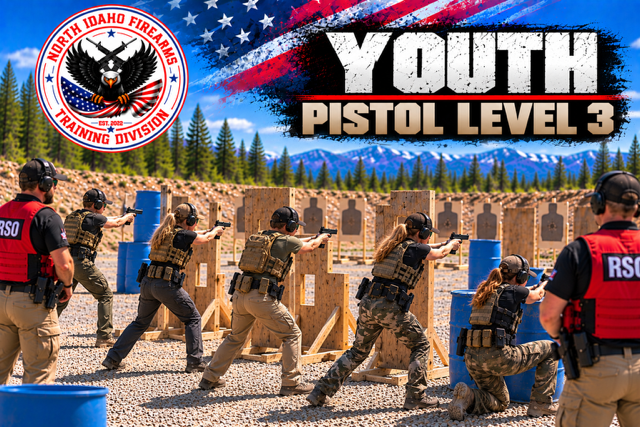
Youth Pistol Level 3 builds on Level 2 with more demanding marksmanship exercises, multiple targets, supervised movement, and shooting for speed and accuracy. Students progress at a pace appropriate to their demonstrated ability. Safe handling and accurate hits remain the priority throughout the course.

Course topics

  • Range and firearm safety review, including the four safety rules, range commands, and hot- and cold-range procedures.
  • Reinforcement of the eight fundamentals of shooting, muzzle control, and trigger-finger discipline.
  • Magazine-changing and malfunction-clearing drills under instructor supervision.
Beginner

Ages: 8–17
Length: 5 hours
Format: Classroom Instruction Only
Live Fire: None

Cost: $40


Course Description

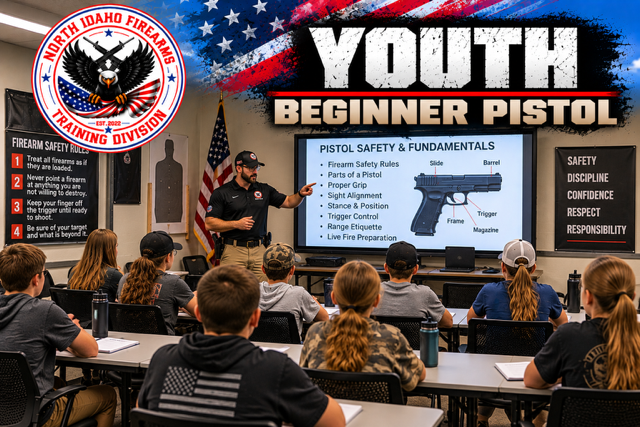
This introductory course teaches young students how semiautomatic pistols and revolvers operate, how ammunition functions, and how to handle, transport, unload, inspect, and maintain a pistol safely.


Training emphasizes responsibility, muzzle awareness, trigger discipline, communication, and respect for firearms. All handling exercises are conducted under direct instructor supervision using unloaded firearms, inert training pistols, and dummy ammunition.


Safety Requirements

  • No live ammunition permitted in the classroom.
  • Firearms are inspected and cleared before entering the classroom.
  • Only instructor-provided dummy ammunition or snap caps may be used.
  • Students must follow all instructor commands immediately.
  • Eye protection is required during disassembly and maintenance.
  • Parent or guardian authorization is required.
  • Parents or guardians are encouraged to attend.
  • Firearms remain pointed in a designated safe direction during every exercise.
  • Instructor-to-student ratio of approximately 1:4 is recommended during firearm-handling exercises.


Course Objectives

By the end of the course, students should be able to:

  • Recite and explain the four fundamental firearm safety rules.
  • Identify the major components of a semiautomatic pistol and revolver.
  • Explain how semiautomatic pistols and revolvers operate.
  • Identify common handgun ammunition and cartridge components.
  • Explain what happens when a cartridge is fired.
  • Demonstrate safe muzzle and trigger-finger control.
  • Demonstrate the eight fundamentals of shooting.
  • Safely load, unload, and verify the condition of a pistol using dummy ammunition.
  • Explain safe firearm transportation and storage.
  • Demonstrate proper behavior at a shooting range.
  • Perform basic field stripping, cleaning, inspection, and reassembly under supervision.
  • Five-Hour Course Schedule

    Time

    Instructional Block

    0:00–0:20

    Welcome, course expectations and classroom safety

    0:20–0:55

    Four fundamental firearm safety rules

    0:55–1:35

    Semiautomatic pistols and revolvers

    1:35–1:45

    Break

    1:45–2:20

    Ammunition types, components and operation

    2:20–2:55

    Safe loading, unloading and condition verification

    2:55–3:05

    Break

    3:05–3:55

    Eight fundamentals of shooting

    3:55–4:20

    Safe transportation, storage and range etiquette

    4:20–4:30

    Break

    4:30–4:55

    Field stripping and basic maintenance

    4:55–5:00

    Final review and course completion

 
NEXT YOUTH CLASS:
NEXT CLASS TBD

***Parents will also be required to sign any and all waiver forms before their child can participate. ***
LEVEL 1

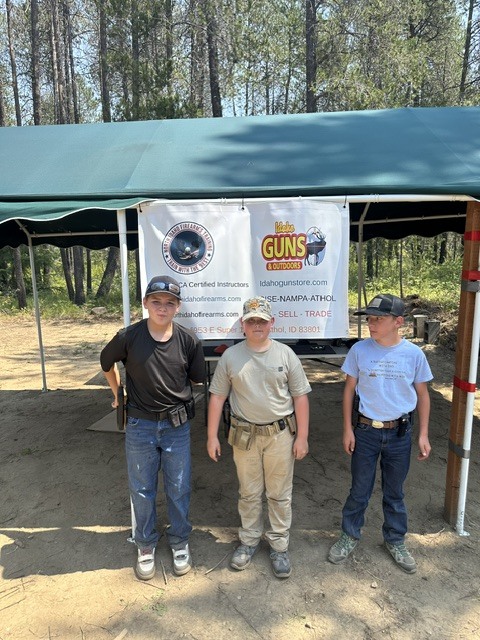
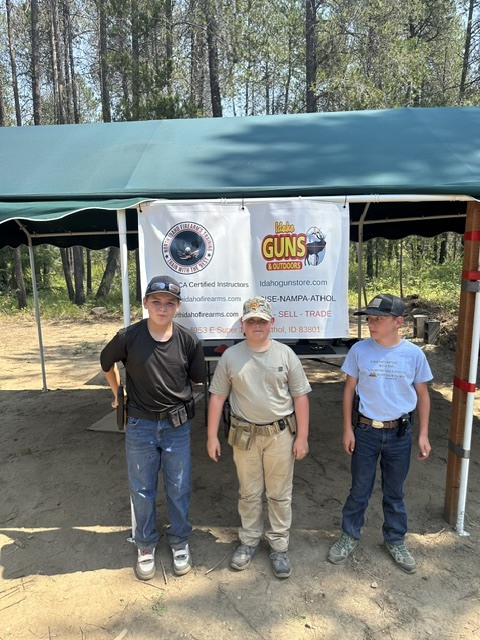
 Youth training classes are open to kids 8 years old to 17 years old. Rifle, Pistol and Shotgun training are some of the classes we offer. From beginner to advanced level.

Intermediate classes start with basic fundamentals, then move into hands on training. More emphasis on trigger control, muzzle control, engaging with multiple targets, and slow walk with their firearm. Advanced will be all range time, with parents present. Space for this class would be limited to 8 kids, who must have taken my intermediate course, or be able to show they have taken an equivalent course from another certified instructor.

NEXT YOUTH CLASS:
NEXT CLASS TBD

***Parents will also be required to sign any and all waiver forms before their child can participate. ***
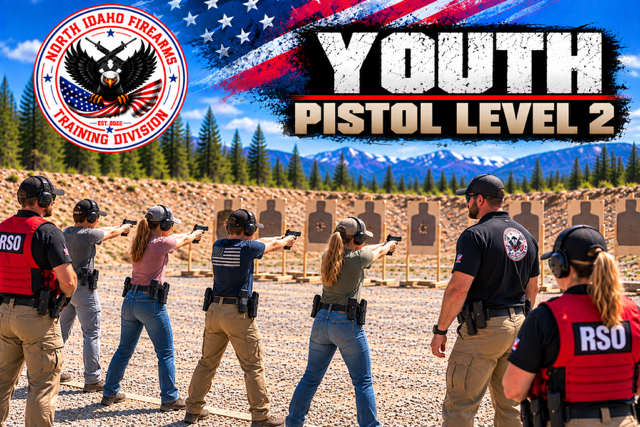
LEVEL 2

 Youth training classes are open to kids 8 years old to 17 years old. Rifle, Pistol and Shotgun training are some of the classes we offer. From beginner to advanced level.

Advanced will start with basic fundamentals, then move into speed reloading, engaging multiple targets, shooting on the move, shooting from holster.

NEXT YOUTH CLASS:
NEXT CLASS 2027

***Parents will also be required to sign any and all waiver forms before their child can participate. ***

Youth Beginner Pistol Training Course

Ages: 8–17
Length: 5 hours
Format: Classroom instruction only
Live Fire: None
Recommended class size: Maximum of 10 students, with additional instructors assisting during handling exercises.

Cost: $40

Course Description

This introductory course teaches young students how semiautomatic pistols and revolvers operate, how ammunition functions, and how to handle, transport, unload, inspect, and maintain a pistol safely.

Training emphasizes responsibility, muzzle awareness, trigger discipline, communication, and respect for firearms. All handling exercises are conducted under direct instructor supervision using unloaded firearms, inert training pistols, and dummy ammunition.

Safety Requirements

  • No live ammunition permitted in the classroom.
  • Firearms are inspected and cleared before entering the classroom.
  • Only instructor-provided dummy ammunition or snap caps may be used.
  • Students must follow all instructor commands immediately.
  • Eye protection is required during disassembly and maintenance.
  • Parent or guardian authorization is required.
  • Parents or guardians are encouraged to attend.
  • Firearms remain pointed in a designated safe direction during every exercise.
  • Instructor-to-student ratio of approximately 1:4 is recommended during firearm-handling exercises.

Course Objectives

By the end of the course, students should be able to:

  • Recite and explain the four fundamental firearm safety rules.
  • Identify the major components of a semiautomatic pistol and revolver.
  • Explain how semiautomatic pistols and revolvers operate.
  • Identify common handgun ammunition and cartridge components.
  • Explain what happens when a cartridge is fired.
  • Demonstrate safe muzzle and trigger-finger control.
  • Demonstrate the eight fundamentals of shooting.
  • Safely load, unload, and verify the condition of a pistol using dummy ammunition.
  • Explain safe firearm transportation and storage.
  • Demonstrate proper behavior at a shooting range.
  • Perform basic field stripping, cleaning, inspection, and reassembly under supervision.


Five-Hour Course Schedule

Time

Instructional Block

0:00–0:20

Welcome, course expectations and classroom safety

0:20–0:55

Four fundamental firearm safety rules

0:55–1:35

Semiautomatic pistols and revolvers

1:35–1:45

Break

1:45–2:20

Ammunition types, components and operation

2:20–2:55

Safe loading, unloading and condition verification

2:55–3:05

Break

3:05–3:55

Eight fundamentals of shooting

3:55–4:20

Safe transportation, storage and range etiquette

4:20–4:30

Break

4:30–4:55

Field stripping and basic maintenance

4:55–5:00

Final review and course completion

Module 1 — Introduction and Classroom Safety

Topics

  • Instructor and student introductions
  • Course purpose and expectations
  • Firearms are tools that require maturity and responsibility
  • Difference between classroom training and live-fire training
  • What to do when an unattended firearm is discovered
  • Immediately notifying a responsible adult
  • Following instructor commands
  • Establishing the classroom safe direction
  • Proper handling of unloaded firearms
  • Difference between live ammunition and dummy ammunition

Youth Safety Procedure

If a student discovers an unattended firearm:

  1. Stop.
  2. Do not touch it.
  3. Leave the immediate area.
  4. Tell a responsible adult.

Module 2 — Four Fundamental Firearm Safety Rules

  1. Treat every firearm as if it is loaded.
  2. Never point the muzzle at anything you are not willing to destroy.
  3. Keep your finger off the trigger until your sights are on the target and you have made the decision to fire.
  4. Be sure of your target and what is in front of, around and beyond it.

Practical Exercises

  • Identifying the safest available direction
  • Demonstrating proper trigger-finger placement
  • Passing or receiving an unloaded firearm safely
  • Correcting unsafe muzzle direction
  • Verbal condition checks between partners
  • Identifying safe and unsafe situations from instructor-provided examples

Module 3 — Semiautomatic Pistols and Revolvers

Semiautomatic Pistol Components

  • Muzzle
  • Barrel
  • Slide
  • Frame
  • Grip
  • Trigger
  • Trigger guard
  • Magazine
  • Magazine release
  • Slide stop or slide release
  • Sights
  • Safety or decocking controls, when equipped
  • Chamber
  • Ejection port
  • Extractor

Semiautomatic Operating Cycle

Students receive a basic explanation of:

  1. Feeding
  2. Chambering
  3. Locking
  4. Firing
  5. Unlocking
  6. Extracting
  7. Ejecting
  8. Cocking

The instructor demonstrates the cycle using an unloaded pistol and dummy cartridges.

Revolver Components

  • Muzzle
  • Barrel
  • Frame
  • Grip
  • Trigger
  • Trigger guard
  • Hammer, when equipped
  • Cylinder
  • Chambers
  • Cylinder release
  • Ejector rod
  • Sights

Revolver Operation

  • Opening and closing the cylinder
  • Loading individual chambers
  • Cylinder rotation
  • Single-action operation
  • Double-action operation
  • Removing cartridges with the ejector rod
  • Visually and physically verifying that every chamber is empty

Comparison

Semiautomatic Pistol

Revolver

Ammunition is normally held in a detachable magazine

Ammunition is held in individual cylinder chambers

The slide cycles during operation

The cylinder rotates

A cartridge may remain in the chamber after the magazine is removed

Every cylinder chamber must be inspected

Uses an extractor and ejector

Usually uses an ejector rod

May have several different control systems

May operate in single action, double action or both


Module 4 — Ammunition

Cartridge Components

  • Bullet or projectile
  • Cartridge case
  • Primer
  • Propellant

Explain that the entire assembled unit is a cartridge or round, while the bullet is only the projectile.

How a Cartridge Operates

  1. The firing pin or striker contacts the primer.
  2. The primer ignites the propellant.
  3. Expanding gas creates pressure inside the cartridge and chamber.
  4. Pressure pushes the bullet through the barrel.
  5. The projectile exits the muzzle.
  6. In a semiautomatic pistol, energy from firing operates the slide and prepares the pistol for the next cartridge.

Ammunition Topics

  • Rimfire versus centerfire ammunition
  • Common handgun cartridges, including .22 LR, .380 ACP, 9mm, .38 Special and .45 ACP
  • Full-metal-jacket and expanding ammunition
  • Correct caliber markings
  • Matching ammunition to the firearm
  • Factory ammunition versus reloaded ammunition
  • Recognizing damaged or corroded cartridges
  • Safe storage of ammunition
  • Why ammunition should be kept separate from firearms during transportation when appropriate
  • Never attempting to fire unidentified or incorrect ammunition

Module 5 — Loading and Unloading

All exercises use dummy ammunition only.

Semiautomatic Pistol

Students practice:

  • Maintaining a safe muzzle direction
  • Keeping the trigger finger indexed on the frame
  • Removing the magazine
  • Locking the slide open
  • Visually and physically inspecting the chamber
  • Inspecting the magazine well and breech face
  • Loading dummy cartridges into a magazine
  • Inserting and removing the magazine
  • Chambering a dummy cartridge under direct supervision
  • Unloading in the correct sequence
  • Verifying and verbally announcing that the pistol is clear

Emphasize that removing the magazine does not guarantee that the chamber is empty.

Revolver

Students practice:

  • Maintaining a safe muzzle direction
  • Keeping the trigger finger indexed
  • Opening the cylinder
  • Loading dummy cartridges
  • Using the ejector rod
  • Inspecting every chamber
  • Closing the cylinder without force or abusive handling
  • Verifying and verbally announcing that the revolver is clear

Module 6 — Eight Fundamentals of Shooting

  1. Stance
    Establish a stable, balanced position with knees slightly bent and body weight controlled.
  2. Grip
    Hold the pistol securely while keeping hands and fingers clear of moving parts and the muzzle.
  3. Sight alignment
    Properly position the front sight in relation to the rear sight.
  4. Sight picture
    Place the correctly aligned sights on the intended target area.
  5. Breathing control
    Maintain natural, controlled breathing without excessive tension.
  6. Trigger control
    Press the trigger smoothly and directly to the rear without disturbing the sights.
  7. Follow-through
    Maintain grip, visual focus, body position and trigger discipline through the completion of the shot.
  8. Recovery
    Allow the sights to return, reassess the target, and prepare safely for the next action.

Classroom Practice

Using inert training pistols or verified unloaded firearms, students practice:

  • Athletic and supported stances
  • Two-handed grip
  • Safe support-hand placement
  • Muzzle awareness during movement
  • Trigger-finger indexing
  • Sight alignment and sight picture
  • Smooth simulated trigger press
  • Follow-through and recovery
  • Returning to a safe ready position on command

Module 7 — Transportation, Storage and Range Etiquette

Transportation and Storage

  • Follow all applicable laws and parental rules.
  • Unload and verify the firearm before transportation.
  • Use a properly sized, secure firearm case.
  • Protect the firearm from unauthorized access.
  • Store firearms and ammunition responsibly.
  • Never display or handle a firearm unnecessarily in public.
  • Never leave a firearm unsecured in a vehicle.
  • A responsible adult should control transportation and storage for youth students.

Range Etiquette

  • Follow all Range Safety Officer commands.
  • Know the difference between “cease fire” and “range is hot.”
  • Stop immediately when a cease-fire command is given.
  • Keep firearms pointed downrange.
  • Keep the action open when required.
  • Do not handle firearms while people are downrange.
  • Wear eye and hearing protection.
  • Remain behind the designated firing line.
  • Do not touch another person’s equipment without permission.
  • Report unsafe conduct, damaged equipment or ammunition problems immediately.
  • Wash hands after handling firearms, ammunition or cleaning materials.

Module 8 — Field Stripping and Maintenance

The instructor demonstrates field stripping according to the manufacturer’s instructions.

Safety Sequence

  1. Point the firearm in a safe direction.
  2. Keep the finger away from the trigger.
  3. Remove the ammunition source.
  4. Open the action.
  5. Visually and physically verify that the firearm is unloaded.
  6. Remove all ammunition from the maintenance area.
  7. Consult the manufacturer’s manual before disassembly.

Maintenance Topics

  • Purpose of routine maintenance
  • Manufacturer-specific disassembly procedures
  • Barrel and chamber inspection
  • Slide, frame and cylinder inspection
  • Basic cleaning tools
  • Proper use of patches, brushes and cleaning products
  • Light lubrication
  • Avoiding excessive oil
  • Recognizing unusual wear, cracks or damaged parts
  • Reassembly
  • Function check under instructor supervision
  • Situations requiring a qualified gunsmith

Students should not perform detailed disassembly or modify firearm components.

Student Evaluation

Students complete:

  • A short written or verbal knowledge review
  • Recitation of the four safety rules
  • Identification of major pistol components
  • Identification of cartridge components
  • Safe muzzle-control demonstration
  • Trigger-finger discipline demonstration
  • Loading and unloading exercises with dummy ammunition
  • Semiautomatic chamber and magazine-well inspection
  • Revolver cylinder inspection
  • Basic field-stripping or maintenance demonstration appropriate to the student’s age and ability

Completion Standard

Students must:

  • Demonstrate safe behavior throughout the course
  • Recite and explain the four safety rules
  • Maintain safe muzzle and trigger-finger control
  • Safely demonstrate unloading and condition verification
  • Participate in the maintenance exercise
  • Complete the final review with a recommended score of 80% or higher

A student who performs an unsafe action should receive immediate corrective instruction and must successfully repeat the exercise before receiving a certificate of completion.

Youth Pistol Level 1

Length: 4 hours
Format: All live-fire range training
Cost: Starting at $60

Youth Pistol Level 1 builds safe firearm handling habits, confidence, and basic marksmanship through closely supervised range instruction. Students practice at a controlled pace, with safety emphasized throughout every exercise.

Course topics

  • Basic firearms safety and the four rules of firearm safety.
  • The eight fundamentals of shooting: stance, grip, sight alignment, sight picture, breathing, trigger control, follow-through, and recovery.
  • Trigger-finger discipline and safe muzzle control.
  • Proper conduct on a live-fire range, including following instructor directions and range commands.
  • Hot-range and cold-range procedures, including when firearms may be handled.
  • Safe loading, reloading, and unloading under instructor supervision.
  • Slow-fire shooting focused on accuracy and consistent fundamentals.
  • Basic marksmanship and shot placement.
  • A final qualification shoot assessing safe handling and basic shooting proficiency.

Required equipment

  • Serviceable pistol—9mm maximum caliber.
  • Three magazines.
  • Pistol case or range bag.
  • Eye and ear protection.
  • 250–300 rounds of ammunition appropriate for the pistol.
  • Clothing appropriate for outdoor weather.
  • Closed-toe shoes.
  • Snacks and drinks.

Parent requirements

Parents are required to sign all waivers before their child participates. Parents may remain and observe from the designated spectator area. They may participate or assist only when specifically asked by the lead instructor.

Four-hour training outline

Training block

Time

Range safety briefing, four safety rules, range commands, and hot/cold-range procedures

30 minutes

Eight fundamentals, muzzle control, trigger control, and supervised slow fire

60 minutes

Supervised loading, reloading, and unloading practice

45 minutes

Marksmanship practice and individual coaching

75 minutes

Final qualification shoot and instructor feedback

30 minutes

Total

4 hours


All instruction takes place on the range. Water breaks and rest periods are incorporated as needed.

Qualification and completion

The final qualification evaluates safe muzzle direction, trigger-finger discipline, compliance with range commands, safe firearm handling, and basic accuracy. The lead instructor establishes and explains the qualification standard before the shoot. Students must demonstrate safe handling throughout the course to complete qualification.

Arrival instructions

Bring the pistol unloaded in a closed case or range bag. Keep it cased until the instructor directs otherwise.

Youth Pistol Level 2

Length: 5 hours
Format: All live-fire range training
Cost: Starting at $100
Prerequisite: Youth Pistol Level 1 or lead instructor approval.

Youth Pistol Level 2 builds on the safety, handling, and marksmanship skills introduced in Level 1. Students receive closely supervised instruction and individual coaching as they develop consistent pistol handling, learn safe holster use, and improve accuracy. Exercises progress according to each student’s demonstrated safety and readiness.

Course topics

  • Review of basic firearms safety and the four rules of firearm safety.
  • Reinforcement of the eight fundamentals of shooting: stance, grip, sight alignment, sight picture, breathing, trigger control, follow-through, and recovery.
  • Consistent muzzle control and trigger-finger discipline.
  • Range commands, proper range conduct, and hot- and cold-range procedures.
  • Safe holster use, including supervised drawing and reholstering.
  • Safe loading, reloading, and unloading.
  • Recognition of common malfunctions and supervised safe responses.
  • Slow-fire accuracy and consistent shot placement at varied distances.
  • Follow-through and recovery between shots.
  • A final qualification shoot assessing safe handling, holster use, and marksmanship.

Required equipment

  • Serviceable pistol—9mm maximum caliber.
  • Three magazines.
  • Properly fitted holster that securely retains the pistol, fully covers the trigger guard, and remains open when the pistol is removed; subject to instructor approval.
  • Sturdy belt suitable for supporting the holster.
  • 350 rounds of ammunition minimum, appropriate for the pistol.
  • Pistol case or range bag.
  • Eye and ear protection.
  • Ballcap—recommended.
  • Clothing appropriate for outdoor weather.
  • Closed-toe shoes.
  • Snacks and drinks.

Parent requirements

Parents must sign all waivers before their child participates. Parents may remain and watch from the designated spectator area. They may participate or assist only when specifically asked by the lead instructor.

Five-hour training outline

Training block

Time

Safety review, equipment inspection, and range procedures

30 minutes

Fundamentals review and accuracy practice

60 minutes

Supervised holster familiarization, drawing, and reholstering

60 minutes

Loading, reloading, unloading, and malfunction awareness

45 minutes

Marksmanship practice and individual coaching

75 minutes

Final qualification shoot and instructor feedback

30 minutes

Total

5 hours


All instruction takes place on the range. Water breaks and rest periods are incorporated as needed. Holster exercises begin with unloaded firearms or training aids before progressing to live fire at the lead instructor’s discretion.

Qualification and completion

The lead instructor explains the qualification standard before the final shoot. Students must demonstrate safe muzzle direction, trigger-finger discipline, compliance with range commands, safe holster handling, and basic accuracy. Safety remains the primary requirement throughout the course.

Arrival instructions

Bring the pistol unloaded in a closed case or range bag. Keep it cased until directed by the instructor.

Youth Pistol Level 3

Length: 6 hours
Format: All live-fire range training
Cost: Starting at $125
Prerequisite: Youth Pistol Level 2 or lead instructor approval. Students must demonstrate safe handling and proficiency with Level 2 skills before participating in movement exercises.

Youth Pistol Level 3 builds on Level 2 with more demanding marksmanship exercises, multiple targets, supervised movement, and shooting for speed and accuracy. Students progress at a pace appropriate to their demonstrated ability. Safe handling and accurate hits remain the priority throughout the course.

Course topics

  • Range and firearm safety review, including the four safety rules, range commands, and hot- and cold-range procedures.
  • Reinforcement of the eight fundamentals of shooting, muzzle control, and trigger-finger discipline.
  • Magazine-changing and malfunction-clearing drills under instructor supervision.
  • Continued development of safe holster use, loading, reloading, and unloading.
  • Shooting on the move within instructor-designated lanes.
  • Engaging multiple paper targets while maintaining safe muzzle direction.
  • Timed shooting exercises that balance speed with accuracy.
  • Individual coaching to improve consistency and marksmanship.
  • A final moving D.O.P.E. drill to measure accuracy and total time.

Required equipment

  • Serviceable pistol—9mm maximum caliber.
  • 3–4 spare magazines, in addition to the magazine used in the pistol.
  • Speed loader compatible with the magazines.
  • 400+ rounds of ammunition appropriate for the pistol.
  • Instructor-approved holster that securely retains the pistol, fully covers the trigger guard, and remains open when empty.
  • Sturdy belt suitable for supporting the holster.
  • Pistol case or range bag.
  • Eye and ear protection.
  • Ballcap—recommended.
  • Clothing appropriate for outdoor weather.
  • Closed-toe shoes.
  • Snacks and drinks.

Parent requirements

Parents must sign all waivers before their child participates. Parents may stay and watch from the designated spectator area. They may participate or assist only when specifically asked by the lead instructor.

Six-hour training outline

Training block

Time

Range/firearm safety review and equipment inspection

30 minutes

Magazine-changing and malfunction-clearing drills

45 minutes

Level 2 skills review: holster handling, fundamentals, and accuracy

60 minutes

Multiple-target shooting exercises

60 minutes

Supervised movement and shooting on the move

75 minutes

Shooting for speed and accuracy

45 minutes

Final moving D.O.P.E. drill and instructor feedback

45 minutes

Total

6 hours


All instruction takes place on the range. Water breaks and rest periods are incorporated as needed. Movement exercises begin with unloaded rehearsal before progressing to live fire at the lead instructor’s discretion.

Final moving D.O.P.E. drill

The course finishes with the moving D.O.P.E. drill using the 5-, 10-, 15-, 20-, and 25-yard stations. Results record total points and total time, with Hit Factor = total points ÷ total time. The lead instructor briefs the course, movement procedures, and scoring before students begin. Participation depends on demonstrated safe handling and readiness.

Arrival instructions

Bring the pistol unloaded in a closed case or range bag. Keep it cased until directed by the instructor. Follow every range command; if uncertain, stop and ask.