Church Security Training

Church Security Training
One- and Two-Day Training Options
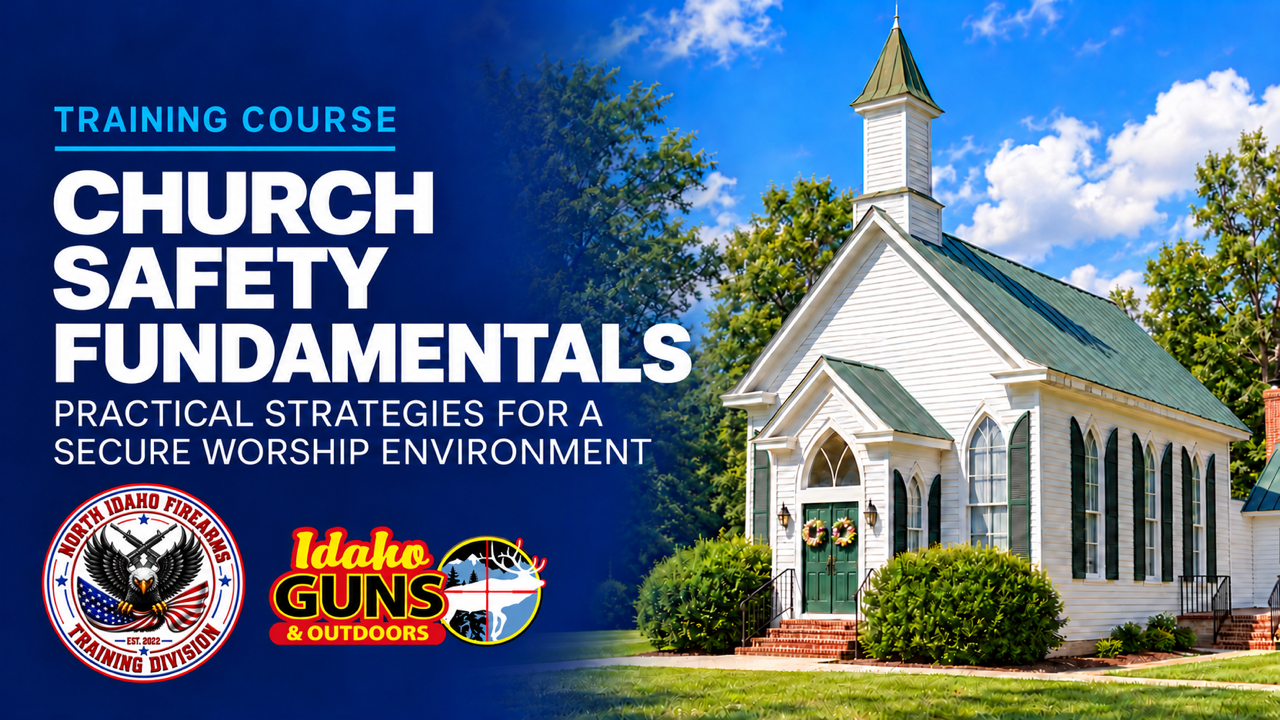
A safe church begins with dependable people, clear policies, and responsible preparation. North Idaho Firearms Training offers three separate training options to help churches establish a security team, develop less-lethal response capabilities, or prepare authorized armed personnel.
Scheduling: To schedule training, Contact North Idaho Firearms Training at info@northidahofirearms.com to discuss the appropriate training option for your church.
1-Day — Church Security Team Development
Cost: $80 each student
For churches starting a security team or strengthening an existing program / 5 hours
This classroom course helps church leadership build a security program suited to its congregation, facility, and needs. Instruction can be held at our classroom or at the participating church.
Topics include:
- Personnel selection: Choosing team members based on character, judgment, emotional maturity, dependability, and willingness to train.
- Team structure: Establishing leadership, responsibilities, communication procedures, and accountability.
- Security options: Considering an unarmed team, an armed team, or an armed team equipped with additional less-lethal options.
- Policies and liability: Written procedures, equipment authorization, documentation, and liability insurance considerations to review with the church’s insurer and legal counsel.
- Prevention and response: Situational awareness, recognizing concerning behavior, de-escalation, emergency planning, and coordination with law enforcement and medical responders.
- Use of force and aftermath: Legal considerations, limits of authority, incident reporting, and the potential consequences of a serious incident.
Focus: Establishing a responsible foundation for church security.
Each student will receive a certificate of attendance.
1-Day — Less-Lethal Pepper Spray Certification / TASER Training
Cost: $100 each student
Pepper Spray certification course through MACE•Brand & US Law Shield, with separate TASER/ 5 hours
This course is designed for church security personnel seeking a less-lethal response option. Classroom instruction and practical exercises address responsible pepper spray and TASER use, its limitations, and the decisions surrounding its deployment.
Topics include:
- Pepper spray characteristics, effects, limitations, and safe handling.
- TASER/Stun Gun operation, safety considerations, limitations, and device familiarization.
- Carry methods, accessibility, storage, and equipment selection.
- De-escalation, communication, and use-of-force considerations.
- Awareness of bystanders, enclosed spaces, and potential cross-contamination.
- Practical exercises using inert training spray.
- Exposure response, decontamination, medical considerations, and incident documentation.
- Required course assessment and certification requirements.
Focus: Responsible use of pepper spray and TASER/Stun Gun devices as part of the church’s authorized security plan.
All students receive an official certificate of completion from MACE Brand & TASER from NIFT
2-Day — Armed Church Security Training
Cost: $175 each student
One classroom day and one full live-fire range day / 14-16 hours
This course is designed for personnel serving in an authorized armed church security role.
Day 1 — Classroom Instruction and Scenarios
Instruction covers armed-team responsibilities, written policies, liability insurance considerations, applicable deadly-force standards, defense of others, de-escalation, emergency communication, and the aftermath of a use-of-force incident. Scenario discussions emphasize judgment, recognizing when to withhold force, congregation safety, and coordination with responding officers. Classroom instruction may be held at our facility or at the participating church.
Day 2 — Live-Fire Range Training
The range day covers the four rules of firearm safety, shooting fundamentals, safe pistol handling, and supervised training from open-carry and concealed-carry holsters. Exercises include reloads, malfunction management, controlled movement drills, moving-target awareness, and decisions involving people entering or crossing the line of fire. Changing conditions are represented through controlled range setups.
Final Qualification: Students must score 90% or higher and demonstrate safe firearm handling to pass the firearms qualification.
Focus: Safe firearm handling, sound judgment, and measurable shooting proficiency.
Scheduling:
Contact North Idaho Firearms Training at info@northidahofirearms.com to discuss the appropriate training option for your church.